Multiple fixtures back up
A toilet, tub, shower, or floor drain backing up together can indicate a concern farther down the drainage system.
PLUMBING SERVICES · BEDFORD & DFW
Sewer-line concerns can be disruptive, but they do not all need the same response. Origin helps you understand the symptom, the line condition, and a practical path forward.
Request service →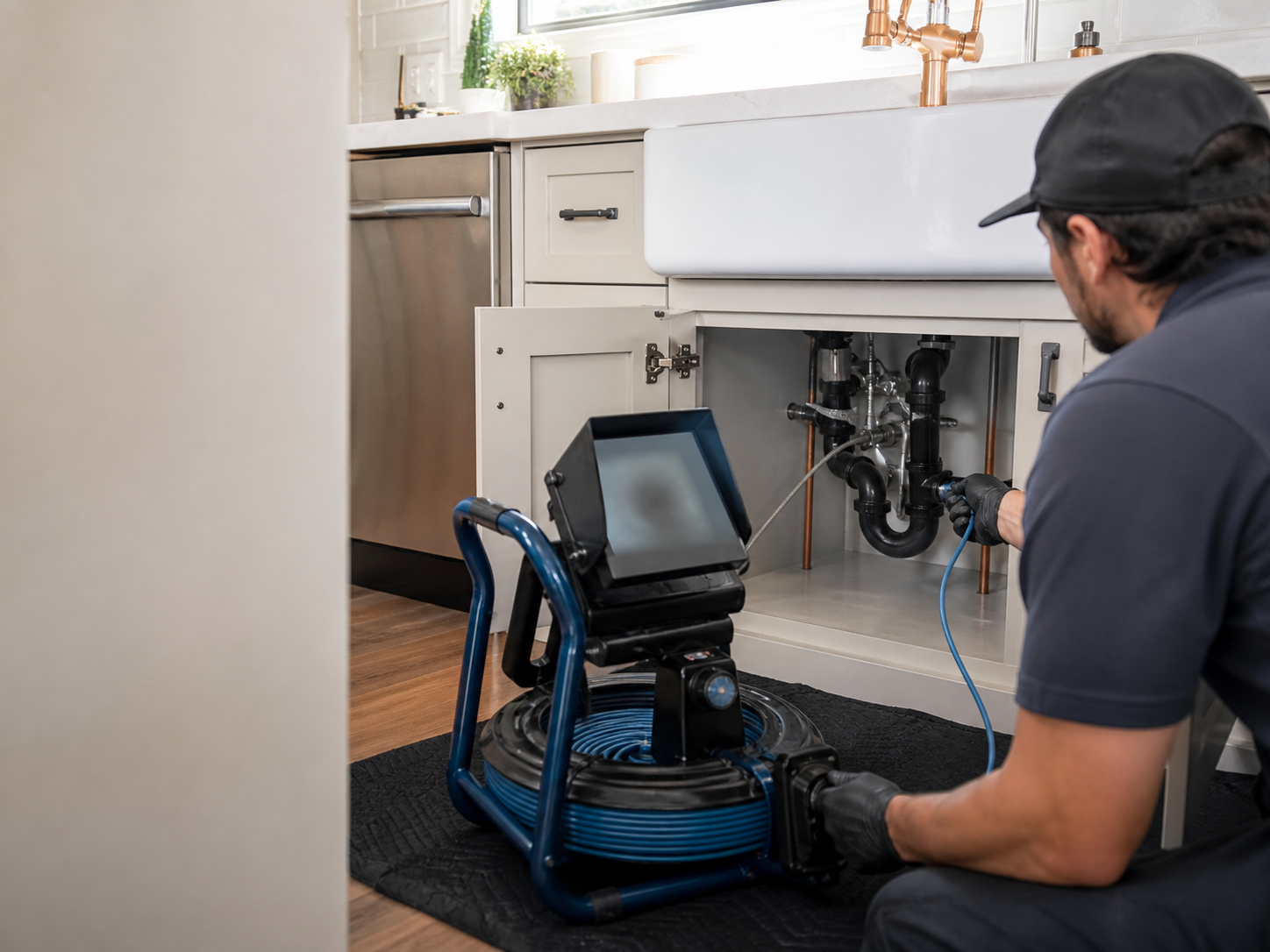
If sewage is backing up indoors, stop using water fixtures and avoid contact with wastewater until a professional can assess the situation.
COMMON SIGNS
Symptoms point us in the right direction; they do not always identify the cause on their own. Noticing the pattern makes a professional assessment more useful.
A toilet, tub, shower, or floor drain backing up together can indicate a concern farther down the drainage system.
A line that needs repeated clearing is a reason to look for the underlying condition instead of treating each episode as unrelated.
Persistent odor, soggy spots, or a change in an outdoor area can be useful clues when considered with drainage symptoms.
Several drains moving slowly at once can point beyond an individual fixture clog.
HOW A VISIT TAKES SHAPE
High-performing plumbing sites explain their process. Here's what a useful service conversation should give you: a clearer picture of the issue, a focused path to confirmation, and an understandable recommendation.
Which fixtures are affected, the timing of the backup, recent work, and how the issue returns help identify where to look.
Before committing to a repair, it is useful to understand the likely location, material, condition, and access constraints.
A good conversation explains targeted repair versus broader replacement planning in the context of the actual line.
AFTER THE DIAGNOSIS
Every home, line, fixture, and access condition is different. The right path depends on what the assessment shows.
COMMON QUESTIONS
These are homeowner-focused answers—not a substitute for seeing the actual plumbing issue.
A single slow sink is often a local drain issue, while several affected fixtures or recurring backups can point to a larger drainage or sewer-line concern.
No. Using water can worsen a backup. Stop using fixtures and seek professional help, especially if wastewater is involved.
Roots are one possible cause, but buildup, shifts, damaged pipe, poor connections, and pipe material can also contribute.
The right scope depends on the line condition and access. A quality assessment should explain what is known, what still needs confirmation, and the available options.
KEEP EXPLORING
SERVING THE METROPLEX
LOCAL, NOT GENERIC
Start with your specific symptom. We'll help you understand the most practical next move for your home.
View Bedford service details ↗